years
6+
Working with DED/LMD across university research, robotic systems, and industrial Exafuse projects.
Sources + Experience
This page collects the numbers, source links, and field context behind the site. I want the writing to feel like engineering notes: specific where the source supports it, careful where the data is conditional, and clear about what AI can and cannot prove.
years
6+
Working with DED/LMD across university research, robotic systems, and industrial Exafuse projects.
first LMD paper
2018
Co-authored a Procedia CIRP paper on laser metal deposition of lattice structures by columnar built-up.
M.Sc. grade
97%
Lasers and Photonics at Ruhr University Bochum, with Faculty Prize / Best Student.
systems layer
ROS2
Sensor/camera control and real-time data pipelines around DED/LMD process monitoring.
Evidence rail
A monitoring signal becomes useful only when it can be routed through model assumptions, decision context, and the inspection evidence needed to verify the claim.
Illustrative workflow
Read left to right: collect a signal, structure its risk, choose evidence, then verify the claim.
Process signals, images, measurements, operator notes, and missing-information cues.
AI, statistical models, engineering rules, uncertainty, and traceable assumptions.
Repairability, process route, inspection need, risk level, and next action.
Inspection, testing, documentation, measured outcomes, and acceptance criteria.
Evidence classification
Not every page carries the same evidentiary weight. This classification keeps public sources, company pages, personal frameworks, lab notes, and drafts separate.
Stable public pages, standards pages, papers, datasets, or public records that can be checked independently.
Company-owned public context for industrial additive manufacturing services, cases, quality, technology, or RFQ paths.
A public partner, venue, event, organization, or third-party source that supports a specific statement.
Manish Sharma Lab frameworks that organize decision-support thinking. Useful as interpretation, not independent evidence.
Broad metadata maps or curated source categories that orient research. Not equivalent to full-text review.
Personal technical interpretation that should link back to source categories, frameworks, and public sources.
A source or claim that still needs verification before it is treated as citation-quality evidence.
Strong vs weak evidence
This is the trust layer behind the tools, frameworks, and lab notes.
Strong evidence is public, specific, stable, and matched to the claim being made. For industrial decisions it usually includes source context, inspection method, acceptance criteria, measured output, and expert review path.
Weak evidence is generic, unsupported, overbroad, or detached from the part risk. A single monitoring signal, unverified AI score, or vague case mention should not be treated as final proof.
Melt-pool and process monitoring can expose review points, drift, or anomaly candidates. Final quality still depends on the inspection, testing, documentation, and acceptance evidence required by the application.
A good recommendation remains traceable to inputs, assumptions, missing information, risk flags, and a next evidence step. This is why the site links repairability, AI readiness, and quality evidence together.
Numbers with source context
These numbers are not universal design rules. They are cited anchors that help readers understand scale, process behavior, and claim boundaries.
10^3-10^5 C/s
A DED state-of-the-art review reports typical cooling rates in this range. That is one reason I care about process history and thermal context.
Ahn, Directed Energy Deposition (DED) Process: State of the Art30-200 um
The same DED review gives this as a common powder diameter range for laser additive manufacturing DED processes.
Ahn, 2021<30%
The review notes that specific cases can be much higher, but the general reported efficiency is often below this value.
Ahn, 202110-30%
The review summarizes literature proposing this range. Outside it, lack-of-fusion and keyhole-type risks become part of the discussion.
Ahn, 20211-3 mm vs <200 um
Our lattice-structure LMD paper contrasts LMD's larger focus size with SLM's smaller focus, which is why the process design logic is different.
Sharma et al., Procedia CIRP 20181070 nm / 450 W / 2 mm
The published experiment used a ytterbium fiber laser, 316L powder, a 2 mm focus size, and a 3 mm substrate for columnar built-up lattice experiments.
Sharma et al., Procedia CIRP 201845-90 um
I keep details like this visible because they are more useful than a generic portfolio claim.
Sharma et al., Procedia CIRP 2018Field notes
The personal layer should not sound like vague authority. It should show how I think when an LMD claim, RFQ, monitoring signal, or AI recommendation looks too confident.
In DED/LMD, stand-off distance and layer-height errors add up quickly. I treat height sensing, toolpath correction, and post-machining allowance as part of the process plan, not a late fix.
Coaxial vision, pyrometry, and melt-pool features are useful because they tell us what the process was doing. They only become strong evidence when they are connected to inspection results.
A weak request is not always a short request. The real problem is missing material grade, damage depth, tolerance, operating conditions, or inspection criteria.
For industrial DED/LMD, parameter logs, change control, build reports, inspection reports, and deviation tracking are part of the work, not paperwork at the end.
Industrial context
These are public company case contexts, not private project details. Each source and limitation is kept with the physical problem it helps explain.
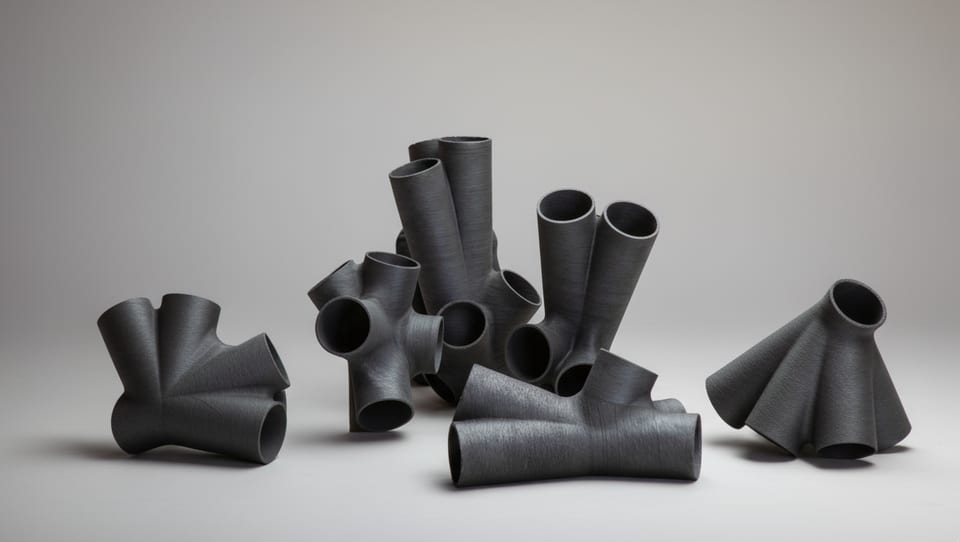
Exafuse public case
For large LMD, manufacturability, toolpaths, monitoring, finishing, and verification must be planned as one decision system.
It is not a blanket approval for another bridge or safety-critical component.
Read the proof story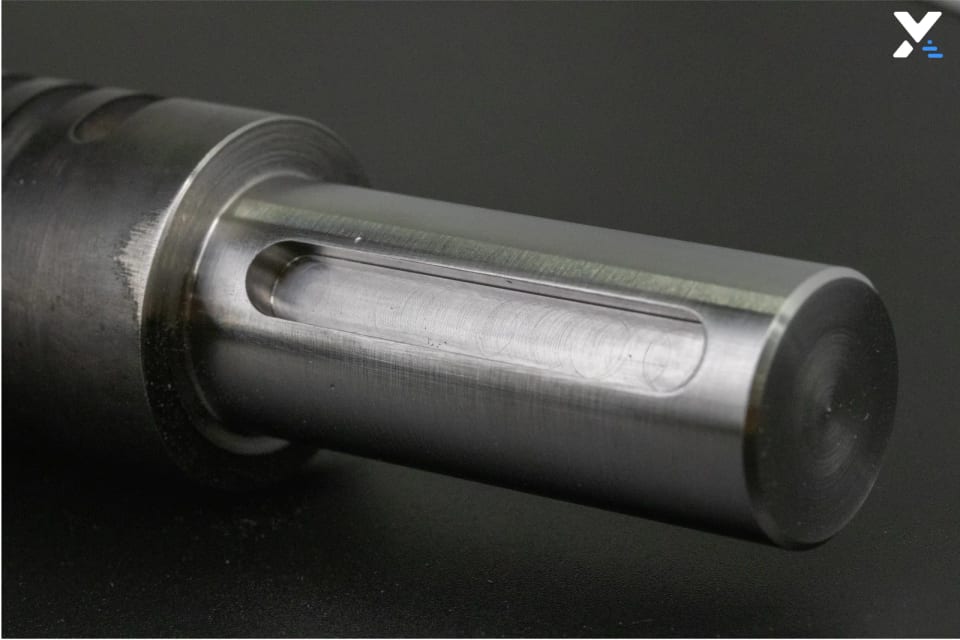
Exafuse public case
Repair evidence starts by defining what must be removed, rebuilt, finished, and inspected—not by covering a visible defect.
It does not establish certified performance, exact tolerance, or service-life extension.
Read the proof story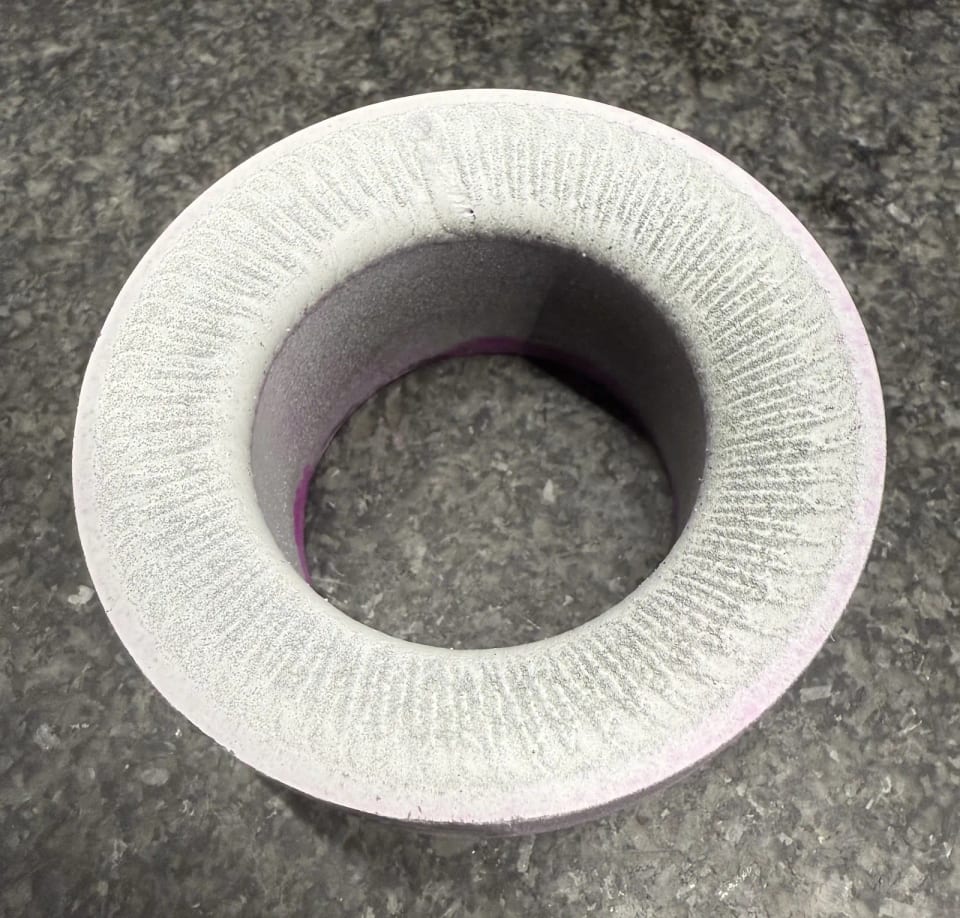
Exafuse public case
A visible inspection result is useful evidence only when it is attached to geometry, material, heat, finishing, and acceptance context.
It does not guarantee crack-free performance for another material, substrate, or ring geometry.
Read the proof story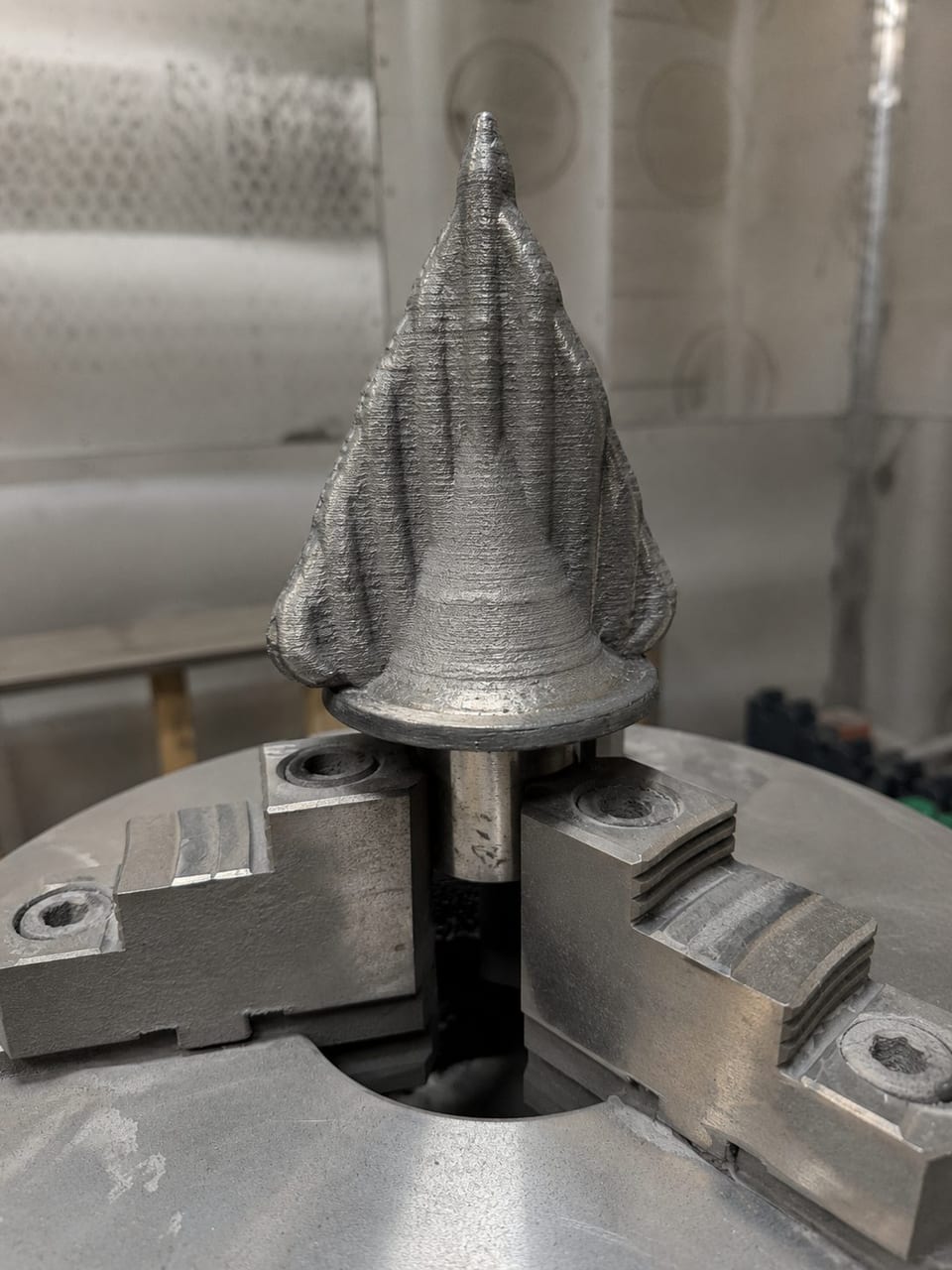
Exafuse public case
Geometry, surface function, material compatibility, finishing, and verification should be prepared as one route.
It does not certify performance for another drilling application.
Read the proof storyReference map
This is a map of the research terrain, not a claim that every paper was read end to end. It helps keep the site vocabulary aligned with real LMD/DED research.
Reference map
500
OpenAlex reference map across eight LMD, DED, laser cladding, melt-pool monitoring, and machine-learning queries. I use it for orientation and vocabulary; exact claims still come from checked sources.
Exact claims on this site are based on source-specific citations. The broader map is useful for topic coverage, terminology, and deciding which content needs more research depth next.
Sources
Established domain