Team and R&D leadership
Managed five employees with hiring responsibility; led Exafuse's contribution to BreitbahnDED, including technical coordination, milestones, costs and reporting.
Manish Sharma · Lasers, photonics and industrial systems
Head of AI & R&D at Exafuse / ThinkIng – Additive Technology GmbH
I work across laser-based manufacturing and industrial systems, combining hands-on process development with sensing, automation, control and R&D leadership. More than six years in DED/LMD and a background in lasers and photonics ground that work in physical processes.
I build systems end-to-end: turning shop-floor constraints into robust workflows, clean data and practical tools. That means connecting deposition strategy and robotics with optical monitoring, machine integration, documentation and quality. Applied AI, machine learning and numerical modelling are engineering tools within that work.
My M.Sc. in Lasers and Photonics at Ruhr University Bochum, recognised with the Faculty Prize for best student, builds on a B.Tech. in Electrical Engineering. I am also an external PhD researcher in Applied Laser Technology at Ruhr University Bochum; the PhD is in progress, expected 2027.
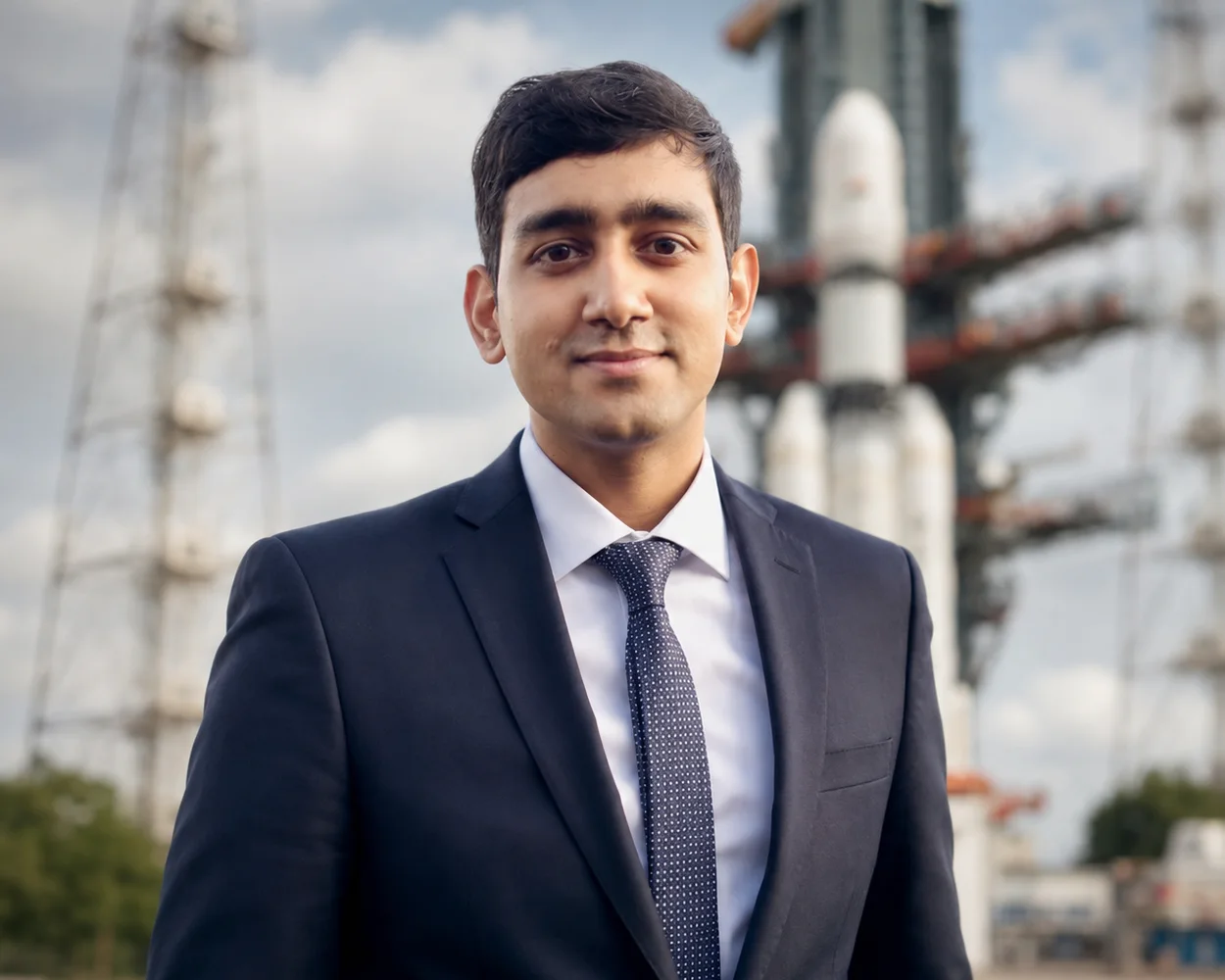
Manish Sharma
Lasers, photonics & industrial systems
Hands-on DED/LMD engineering · R&D leadership
Engineering, research and delivery
Exafuse · Ruhr University Bochum
Engineering responsibility
Managed five employees with hiring responsibility; led Exafuse's contribution to BreitbahnDED, including technical coordination, milestones, costs and reporting.
Monitoring and control deployed across three machines at two sites.
Read the system caseCamera-based height sensing developed from concept to tested prototype, with practical optics, illumination and calibration.
Explore height sensingBuilt in-house MES/ERP with Print-ID traceability and operator procedures, used by every operator.
Read about traceabilityProject responsibility
In a small manufacturing team, I work across the interfaces between engineering, operations and commercial delivery.
Part requirements, CAD, sourcing, quotations, and cost and price considerations.
LMD/DED process development, control-system work, sensing and robotic workflows.
Camera and sensor integration, process analytics, calibration and quality checks.
Build documentation, team coordination and delivery through to shipment.
Selected delivery · Duisburg · 2024
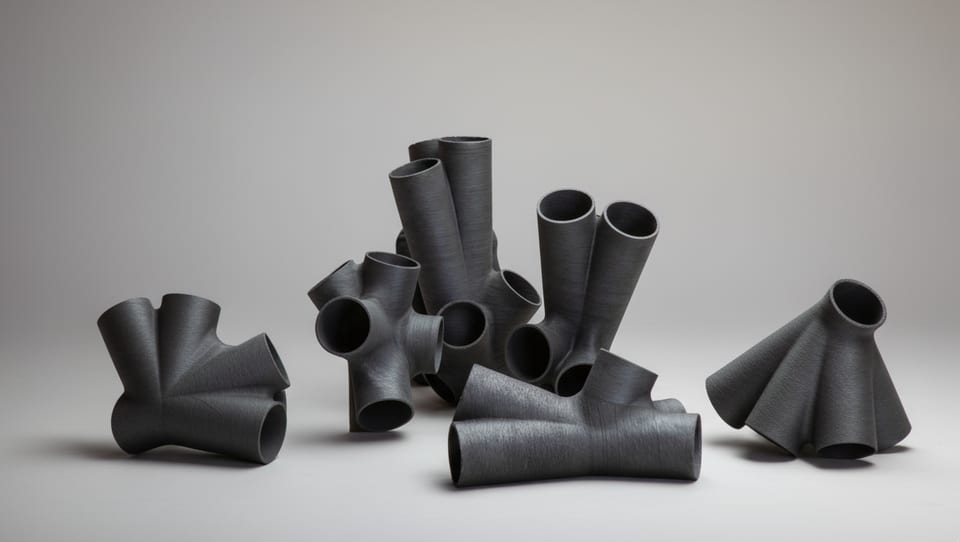
In 2024, I led process monitoring and control work that enabled unattended builds for Exafuse's Duisburg bridge-component project, and coordinated delivery scheduling within my scope. Testing was outside my role.
Exafuse's published project includes structural nodes and handrail elements. It connects CAD adaptation, deposition planning, long-duration production, monitoring and independent project-specific validation support.
Project scale: Exafuse's published record. Personal role and unattended-build outcome: my professional account.
Selected work
Integrated manufacturing systems
System development and doctoral research
I built an integrated LMD control system covering modelling, simulation, path planning, camera and sensor monitoring, software, data processing and live control. Monitoring and control have been deployed across three machines at two sites. This work forms part of my doctoral thesis; each machine requires its own integration and commissioning.
Explore the LMD control systemCollaborative research
Lead for Exafuse's contribution
I led Exafuse's contribution to BreitbahnDED, including technical coordination, milestones, costs and reporting, and helped develop and write the project proposal. This connects manufacturing requirements, monitoring and software with university research. I also work with Ruhr University Bochum on new research proposals.
Read the Exafuse project articlePublic technical work
Engineering knowledge made inspectable
My public work includes a portable brief for LMD/DED engineering questions, technical notes and a research publication on lattice-structure deposition. The tools make assumptions and evidence needs explicit; physical inspection remains essential.
Read the LMD Decision BriefDelivered software
Website development
I built Exafuse's website. It brings industrial services, technical case studies and enquiry-preparation tools into a public interface for engineering customers.
View the delivered websiteKnowledge exchange
Invited teaching and engineering contributions
I give recurring invited guest lectures at ISRO in a personal capacity. I also advise ISRO teams on additive manufacturing and contribute to WAAM machine development for rocket-nozzle manufacturing.
Technical advisory work
I advise teams at Tata Steel and Bharat Heavy Electricals Limited (BHEL), Haridwar on additive manufacturing, drawing on my experience in process development, monitoring and manufacturing workflows.
Professional background
Jan 2024 – Present
Exafuse / ThinkIng – Additive Technology GmbH, Bochum
I lead R&D and manufacturing projects from sourcing and CAD through processing, monitoring, quality checks and shipment. I have managed five employees with hiring responsibility. My work includes technical coordination, milestones, costs and reporting for Exafuse's BreitbahnDED contribution, alongside quotations, cost comparisons and operational responsibility in a small team.
Jan 2020 – Dec 2023
Exafuse / ThinkIng – Additive Technology GmbH, Bochum
Developed machine-vision monitoring systems, neural-network feature extraction and automation interfaces for LMD, including vision-based height sensing and robotic toolpath work.
Dec 2017 – Jun 2021
Ruhr University Bochum
Research Assistant from December 2017 to December 2019, followed by Wissenschaftlicher Mitarbeiter from January 2020 to June 2021. Research covered LMD vision systems, machine learning and lattice-structure deposition.
Research and education
Ruhr University Bochum · Applied Laser Technology
Research in vision-based LMD process control with artificial intelligence. External doctoral research since March 2020; the PhD has not yet been awarded.
Ruhr University Bochum
Faculty Prize for best student. Thesis on machine-learning approaches in LMD lattice structures.
Rajasthan Technical University, India
May 2012 – June 2016. Gold Medal / first-rank academic recognition.
LanguagesEnglish C1; German B1, progressing toward B2; Hindi native.
Publication and speaking
Technical projects, R&D, laser-based manufacturing, photonics, sensing or industrial systems.
Start a conversationProfile updated October 2026
Identity path