Exafuse public case context
Duisburg Bridge Components: large-part LMD from CAD adaptation to evidence planning
A public infrastructure project needed large structural nodes and handrail components to move from a sculptural design intent to a manufacturable, inspectable LMD route.
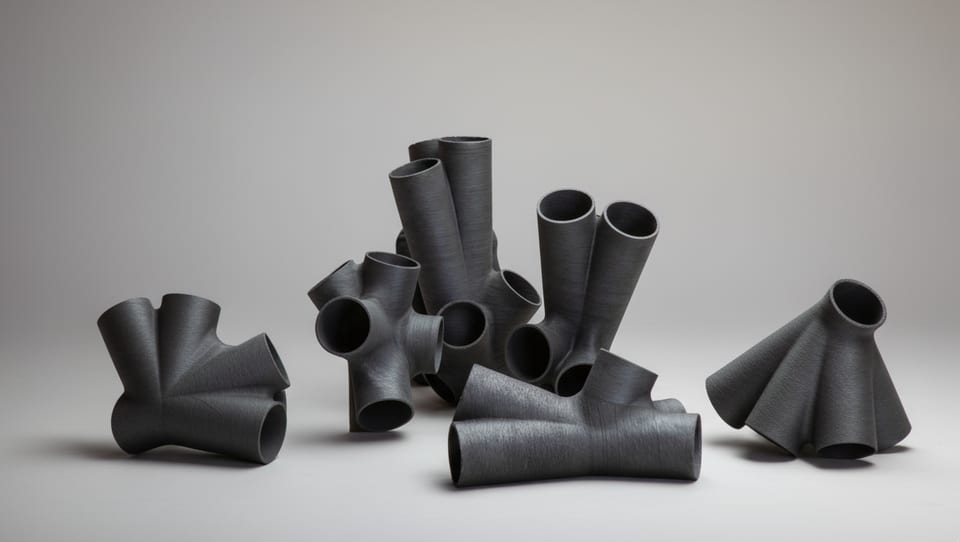
Exafuse owns the company case and commercial route. Manish Sharma Lab uses this public context to explain a decision pattern, not to claim project execution, engineering approval, or certification.
Public route
The physical context and decision route
Industrial context
Large structural metal components for a pedestrian bridge in Duisburg.
Public process route
CAD adaptation, deposition-path development, long-duration LMD production, monitoring, finishing planning, and project-specific validation support.
Material context
The public case is about scale and route development; it does not publish a transferable material-acceptance basis.
Verified public facts
Facts with source and limit attached
These figures are public case context. They are not transferable commitments, acceptance criteria, or proof of another component’s feasibility.
- Documented components
- 750+ kg
- Structural nodes
- 6 nodes
- Single-node build
- 219 h
- Six-node robot path
- 38 km
- Monitoring context
- 1M+ melt-pool images
Project scale context only; it is not a quality approval or a transferable feasibility claim.
Exafuse sourceA project count, not a claim that another structural component is approved.
Exafuse sourceProject build-duration context only; it is not a productivity, scheduling, or cost commitment.
Exafuse sourcePath-length context only; it is not a transferable process-capability claim.
Exafuse sourceMonitoring data supports process understanding; it does not prove final part quality by itself.
Exafuse sourceEvidence and validation
What the evidence needs to resolve
The public record describes independent project-specific validation support and makes clear that another structural application needs its own engineering, inspection, and acceptance route.
The public case connects long-build monitoring and process analysis to production evidence without presenting monitoring as final approval.
What this public case demonstrates
Useful public context—without stretching the claim
- A public large-part LMD project can be described as a connected CAD-to-production route.
- Public monitoring context can support an evidence discussion when its inspection boundary remains explicit.
- Complex, high-value components need a planned validation path rather than confidence from deposition alone.
What it does not demonstrate
- It is not a blanket approval for another bridge or safety-critical component.
- It does not replace structural engineering, inspection, certification, or customer acceptance.
- It does not make the public production figures a commitment for another geometry or material.
Manish Sharma Lab interpretation
Use the case to improve the next question
This public case context is used here to explain an evidence-aware decision pattern. It is not a statement of personal ownership of Exafuse's project execution.
Exact public source
CS15 Duisburg Bridge ComponentsCompany route
Contact Exafuse for company review, services, or RFQ